TL; DR
In solar plants, efficiency is measured by determining how well PV cells perform. This requires accurate electrical measurements using tools that can track data and assess performance. It helps catch fixes early and is generally used during site assessment, installation, testing, and regular maintenance to keep the system safe and reliable. Accurate measurements help identify weak panels, spot faults, comply with safety standards, and minimize energy losses. However, even small errors in measurement or monitoring can reduce energy production and affect long-term profits. This is why selecting the right measurement tools is as important as choosing the right solar equipment. With reliable measurement tools, solar plants run more efficiently, achieve better results, and provide value for many years.Introduction
With most solar operators focusing on panel maintenance and sunlight-to-peak efficiency, they often overlook the silent factors that affect the overall efficiency of the plants. Issues such as inaccurate irradiance measurements, mismatch losses, and overheating are key factors that determine system performance. Reports from top energy analysts suggest that instrumentation problems in solar installations account for 5-10% of energy yield losses. If such is the case, then even a $100 million solar plant might incur approximately $1.5 million in losses annually. In solar energy systems, instrument efficiency is critical, so deploying specialized diagnostic tools to detect measurement anomalies is crucial. This blog is a complete guide to electrical measuring instruments for solar plants, explaining their importance, applications, and role in improving system performance and efficiency.Why Solar Energy Systems Depend on Accurate Electrical Measurement
The efficiency of solar plants hinges on the accurate records of the operational data they generate. This data becomes valuable when all electrical parameters, such as current and voltage, are accurately measured. An electrical measuring tool keeps an eye on these factors, as the system’s performance is often affected by environmental conditions. Here’s a list that shows which factors affect the system and why the measurement matters:| Factor | Why Accurate Measurement Matters |
| DC High Voltage | PV strings operate at 1,000–1,500 V DC. That’s why inaccurate readings can cause damage or shock. |
| Variable Irradiance | Real-time measurements are essential due to fluctuating solar output. |
| String Imbalance | Mismatched strings reduce output, and current/voltage measurements can identify issues. |
| Grid Compliance | Inverters must meet power quality standards, verified through distortion and flicker measurements. |
Types of Electrical Measuring Instruments Used in Solar Plants
A solar plant uses various diagnostic tools to verify the quality of its performance. Here are some of them:
Instrument |
What It Measures |
Used for Solar Plants |
| Digital Multimeter (DMM) | Voltage, resistance, continuity | Checking panel voltage, wiring, connections and continuity |
| Clamp Meter | Current (AC/DC) | Measuring current without disconnecting wires |
| I-V Curve Tracer | Panel performance curve | Finding shading, mismatch, or degraded panels |
| Pyranometer | Solar irradiance (sunlight intensity) | Measuring available sunlight and system performance |
| Insulation Resistance Tester (Megger) | Insulation resistance | Checking cable and system insulation safety |
| Thermal Imaging Camera | Temperature patterns | Detecting hot spots and loose connections |
| Wattmeter / Power Meter | Power output | Monitoring electricity generation and inverter efficiency |
| Energy Meter | Energy produced or consumed (kWh) | Net metering and energy tracking |
| Earth / Ground Tester | Ground resistance | Verifying proper grounding and safety |
| Reference Cell/System | Soiling losses | Measuring power loss caused by dust and dirt |
| Solar Simulator | Simulated sunlight | Laboratory testing of solar panels |
| Data Logger | Multiple system parameters | Continuous monitoring and data recording |
How Electrical Measuring Instruments Are Used at Different Stages of a PV Project
At every step of a solar PV project, electrical measuring tools are very important. These pass through three key stages. Each of these stages requires specific instruments. Here’s all details:1. Planning Phase
Site assessment is necessary prior to installation. Experts use a pyranometer to measure solar irradiance, a solar explorer finds shade year-round, and a solar analyzer measures electrical power. These measurements improve machine planning.2. Installation and Commissioning Phase
System testing follows panel installation. Then, technicians use a clamp meter to measure current, whereas a digital voltmeter is used to monitor voltage and wiring. An I-V curve tracer checks panel functionality. Insulation resistance, earth resistance, and heat imaging tests identify installation issues and safety risks.3. Operation and Maintenance Phase
After the system starts generating power, it must be checked regularly. Clamp meters and infrared cameras may find broken strings and hot spots. Power quality testers, current transformers, and reference systems detect dirt-induced voltage fluctuations, harmonic distortion, and energy losses. Data logs and energy meters track performance.Benefits of Accurate Measurement in Solar Plants
Major advantages of accurate measurement in solar plants are:- Better Safety: These tools help find problems with links and wires. As a result, it lowers the risk of electricity problems.
- Increased Energy Generation: Accurate measurements help detect weak solar panels early. This gives time to fix them quickly and get more energy.
- Compliance with Standards: Solar installations must comply with grid and safety standards. Accurate measurements help to meet this.
- Early Fault Detection: These devices identify problems like shading, broken panels, or loose connections before they get worse.
Common Measurement Errors and Their Impact on Performance
What might come as a surprise is that even small measurement and design mistakes can reduce a plant’s efficiency. Issues like these can lead to losses and might eventually harm earnings in the long run. Accordingly, fixing these errors at the right time is important to keep your plant at its best. Some of the frequent problems are: –- Using the incorrect tools may harm equipment and raise safety concerns.
- Unsteady power or improper DC shunts produce less energy.
- Shading underestimation may lead to unexpected shading and reduced power output.
- The size of components and the harmonic distortion may impact the performance of an inverter.
- Dirty solar panels and not enough tracking reduce system efficiency over time.
- Incorrect voltage measurements and temperature fluctuations might cause incorrect repairs that may lead to further issues.
Choosing the Right Electrical Measuring Instruments for Solar Projects
The type and scale of a solar project determine the instruments required. Utility-scale solar farms require different tools from rooftop systems in homes. Digital multimeters and clamp meters are good for testing and fixing things that aren’t working right. Larger and more complex systems require advanced troubleshooting tools such as I-V curve tracers and data recorders to accurately measure performance, identify problems, and operate safely at high voltages. Safety is a top priority when selecting measuring instruments. As a result, it is imperative to prioritize accuracy, reliability, and strong insulation performance. The use of such advanced tools improves measurement quality, problem detection, and system maintenance. These measures help protect both personnel and the solar installation itself. To understand what to consider while selecting monitoring devices, read our guide on choosing the Right Panel Meter for Industrial Use.Conclusion
A high-performing solar plant depends on consistent monitoring and measurement in addition to quality panels and components. The right testing instruments help technicians validate performance, diagnose faults early, maintain electrical safety, and reduce avoidable energy losses. In solar operations, what you measure directly influences what you can improve. For accurate testing from installation to maintenance, explore Beemet’s voltmeters, ammeters, and current transformers built for accuracy and safety.FAQ
Panel meters provide a single electrical reading, such as current or voltage. On the other hand, a multifunctional meter is a good choice for monitoring systems because it can display multiple values simultaneously.
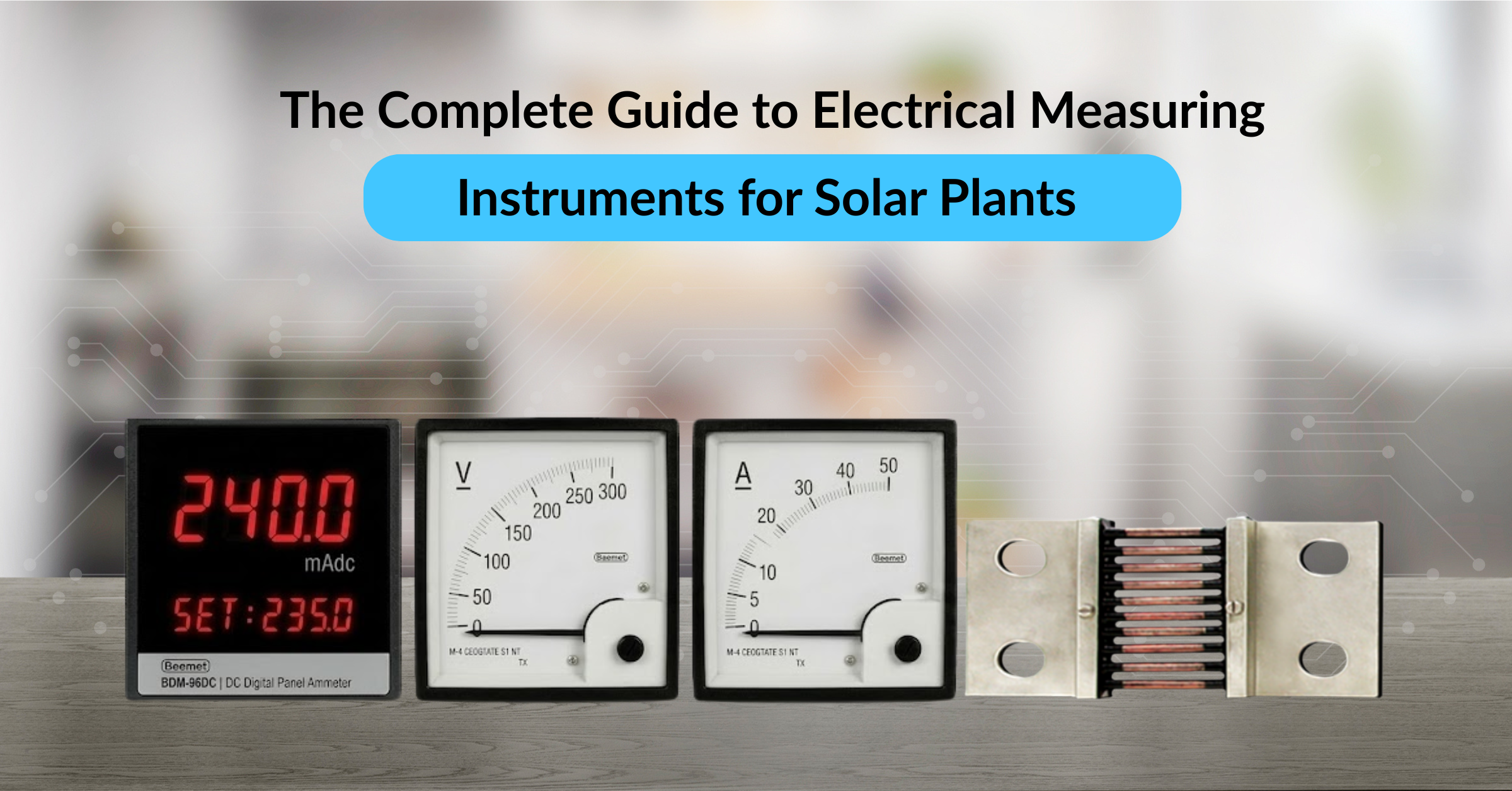
Current transformers enable the safe measurement of large currents without connecting measuring instruments directly to the circuit. They are crucial for monitoring and regulating energy in larger solar projects.
A voltmeter is used to measure the voltage, while an ammeter is used to measure the current. They work together to help experts assess the system’s performance, identify problems, and ensure it is safe.