TL; DR
Choosing the right earth leakage relay depends entirely on the type of electrical panel, its load, and environmental conditions. Mistakes in choosing this result in downtime due to tripping or unexpected fluctuations. Choosing a compatible Core Balance Current Transformer (CBCT) size for your busbar can protect electrical panels from damage. The right relay selection directly impacts safety, preventing fire hazards, panel damage, or electric shock injuries. These aspects play a key role in protecting systems from hazardous downtimes.
Why Earth Leakage Protection is Essential for Safe Panel Operation?
Every safe and functioning electrical panel requires protection against leakage current. Electric panels are critical to daily operations, whether in commercial or residential settings. Undetected leakage remains a hidden threat that can compromise both equipment integrity and personnel safety.
Even small amounts of electrical leakage can put you at risk of shocks, fires, or equipment damage. The Earth Leakage Protection system is a critical safety net that protects all electrically driven systems.
The Earth Leakage Relay (ELR )’s swift response not only keeps people and property safe but also ensures that safety laws are followed. Every power panel, therefore, must possess this safety measure.
This blog will help you choose the right ELR for your panel.
What is Earth Leakage Relay (ELR) in Electrical Systems?
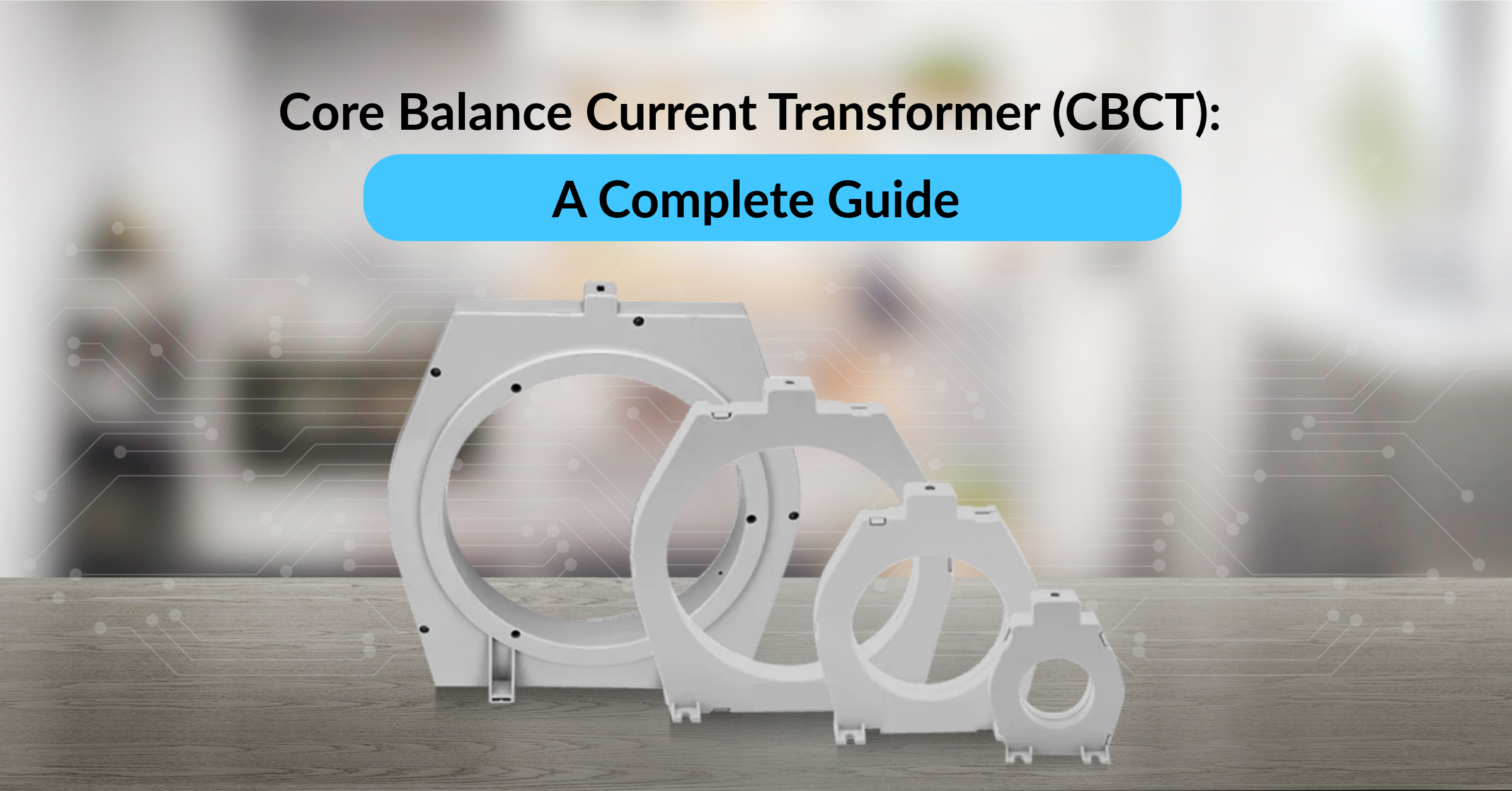
An Earth Leakage Relay is a safety device that monitors electrical circuits for leakage currents. It operates with a Zero Sequence Current Transformer (ZCT), also known as a Core Balance Current Transformer (CBCT).
In most cases, the current flowing through the phase wires is equal to the current returning via the neutral wire. However, if there is a leak, part of the current may be diverted to the ground rather than returned, resulting in an imbalance. The CBCT detects the imbalance and sends a signal to the ELR.
If the leakage current exceeds a predetermined safe limit, the ELR responds immediately. It activates its output connections, which trigger a circuit breaker. This is often done by sending a signal to a shunt trip or undervoltage release coil on the main circuit breaker.
ELRs are available in three main types:
- Analog ELR: It is simple and cost-effective while being suitable for basic protection.
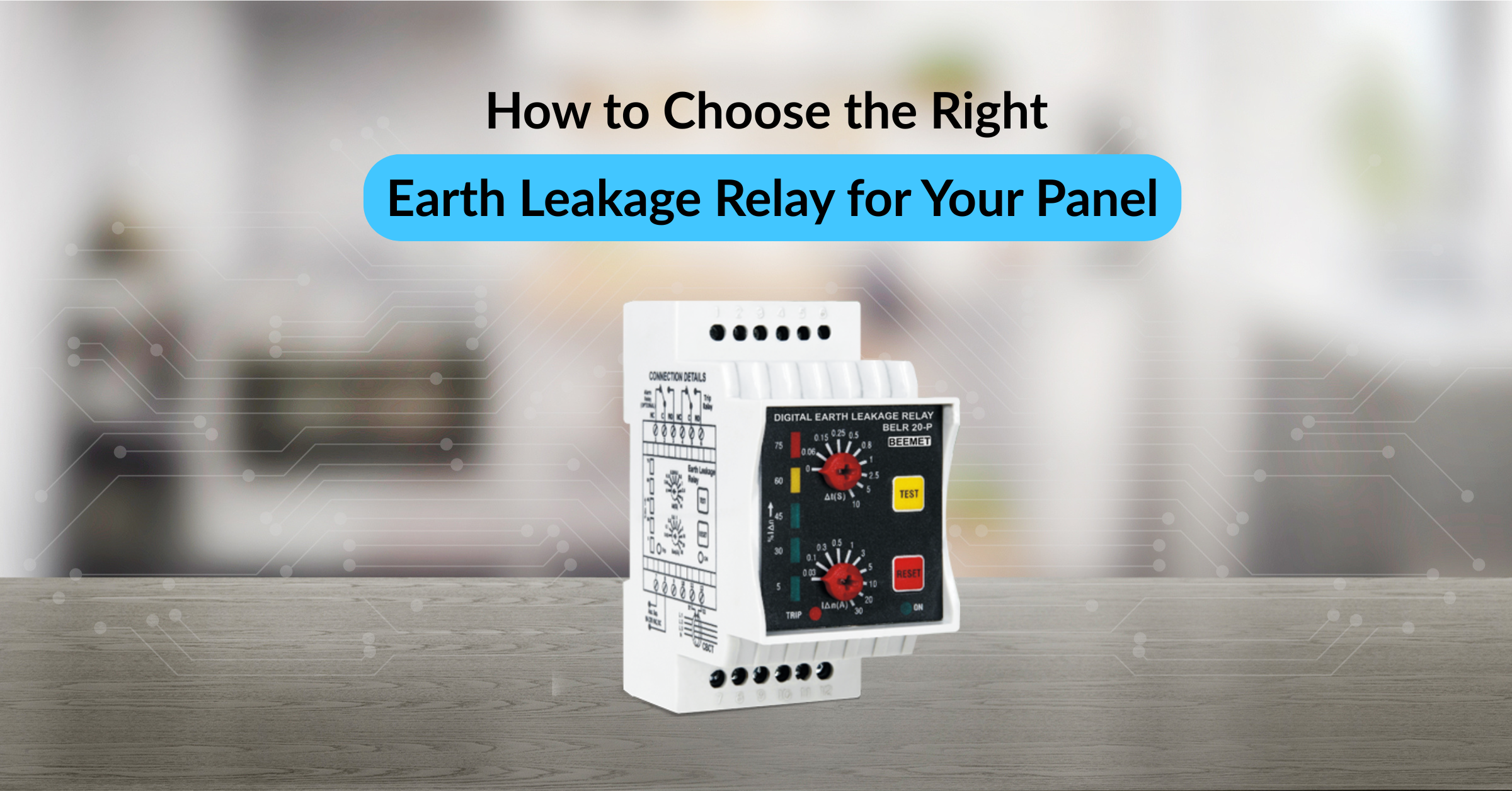
- Digital ELR: This is an Advanced model with display, adjustable settings, communication features, and fault logging.
- Integrated Devices (RCCB/RCBO): It is commonly used in residential systems.
ELRs have sensitivity from 30 mA to 30 A, depending on their purpose.
Learn more in our guide: All about Digital Earth leakage Relay
Earth Leakage Relay in Industrial Electrical Control Panels and Systems
Industrial panels control heavy loads such as motors, power distribution systems, pumps, and variable frequency drives (VFDs). That’s why an essential component of these systems is the Earth Leakage Relay (ELR). Core Balance Current Transformers (CBCTs) are compatible with it. The electrical currents in each phase and neutral conductor are monitored by these CBCTs. In the event of a leak, the ELR immediately trips the breaker to turn off the circuit, protecting everyone.
Modern digital ELRs come with a plethora of useful functions:
- It aids with proactive management by warning operators with alarms prior to a complete shutdown.
- It operates with a variety of wave patterns, including AC, pulsating DC, and smooth DC loads.
- It facilitates the use of PLC or SCADA systems by supporting communication protocols like Modbus.
- Event recording is another helpful function that allows you to perform predictive maintenance by monitoring.
Not sure if your panel requires an ELR or a standard breaker? Gain clarity by reading our guide on the Difference Between ELR, ELCB and RCCB.
Earth Leakage Relay Connection and Diagram Explained
You should be careful while connecting an Earth Leakage Relay (ELR) to make sure it works safely. During setup, a few important things are done on a regular basis.
- First, connect the extra power source. Plug the power source into the A1 and A2 pins of the ELR. The ELR can normally handle AC/DC voltages between 110 and 240 volts.
- Next, link up with the CBCT. Attach the secondary wires from the CBCT to the T1 and T2 on the switch. The CBCT core should only let the neutral and phase wires through. Don’t allow the ground wire through. This stops interference and keeps everything safe.
- A trip circuit is another important thing. The output wires of molded case circuit breakers (MCCBs) should be connected to their undervoltage release coil or shunt trip coil. When the escape current gets too high, the relay turns on and the trip contact opens. This disconnects to keep things safe.
Most ELRs also have a test button that is helpful. You need to verify the system every day to make sure it works and is safe.
Key Factors for Selecting the Right Earth Leakage Relay for Your Panel
When you’re selecting the correct ELR, you require understanding the load, the system design, and the protection requirement.
Factor | Description | Options / Considerations | Example |
Sensitivity (Trip Current) | Determines the leakage current level that triggers the relay | 30 mA (human protection), 100–300 mA (fire protection), up to 30 A for industrial use | 30 mA for personnel safety |
Time Delay | Prevents unwanted tripping during transient currents | Instant to 10 seconds | 0.25 s for motor circuits |
Relay Type / Waveform | Must match load type | Type AC, Type A, Type B | Type A/B for VFDs |
Auxiliary Supply | Voltage needed to power the relay | 110–240 V AC/DC | Match site supply |
CBCT Size | Must accommodate cable bundle | Window sizes 30–210 mm | Choose based on cable diameter |
Advanced Features | Monitoring and diagnostics | Modbus, alarms, event logs | Useful for predictive maintenance |
Mounting and Environmental Rating | Panel installation conditions | DIN rail mounting, IP protection | Industrial panels |
Step-by-Step Guide to Choosing the Right ELR
If you are selecting the right relay, you must follow a structured approach. The followings steps will guide you to choose the right ELR for your system:
- Study the Load Type: Find out if your load is AC or has DC parts, such as EV chargers or variable frequency drives.
- Define the Protection Goal: Figure out what kind of security you require. 30 mA is the safest level. Think about using 100 to 500 mA to keep your tools safe from fire.
3: Choose the size of the CBCT: Your Current Balance Core Transformer (CBCT) should have a window size that matches your cable pack.
- Set the Time Delay: For safety, choose quick tripping.
- Check the Power: Make sure your Earth Leakage backup power supply is working.
Common Panel Faults and Mistakes to Avoid When Selecting an ELR
Your incorrect selection or installation of the right ELR in your system might cause protection failure. Some of these common mistakes are
- An undersized Current Balanced Core Transformer (CBCT) might overload electrical systems and trip them.
- Direct Current (DC) leakage from VFDs or electric car chargers may be difficult to identify using an AC relay.
- Choose the proper time delay settings; otherwise, the motor may trip immediately, making startup difficult.
- Running the ground wire via the CBCT makes leaks harder to discover due to improper wiring.
- TN-C systems with Earth Leakage Relays (ELR) without Protective Earth Neutral (PEN) separation have greater leakage.
- Check protection equipment routinely for proper operation.
If you prevent these mistakes, you can ensure the performance of the protection system exactly when it is needed.
Already dealing with nuisance tripping or sensing errors? Find the fix in our expert guide on How to Troubleshoot Common Problems in Digital Earth Leakage Relays (ELR)
Conclusion
Reliability in electrical safety starts with the right components. A carefully selected ELR protects people and safeguards business against the interruptions and damage caused by leakage currents.
Beemet leverages its expertise in handling specific challenges of leakage detection and panel monitoring. The company specializes in high-accuracy Core Balance Current Transformers (CBCTs) that integrate seamlessly with ELRs, ensuring reliable sensing and preventing nuisance tripping. Whether managing industrial loads or sensitive infrastructure, Beemet’s components ensure your systems remain safe, stable, and compliant. Ensure your systems are fully protected with Beemet’s high-precision Digital Earth Leakage Relays.
Contact us today for help choosing the right protection solution for your panel.
FAQ
An Earth-leaking relay checks for leaking current going to the ground and trips the circuit breaker if it gets too high. This keeps people, tools, and electrical systems from getting hurt, caught on fire, or shocked.
When an ELR finds a leak, it tells an outside CBCT about it and trips a circuit breaker. RCCB is a single unit that has both sense and trip devices built in.
All of the phase and neutral wires that go through the CBCT have to fit. If it’s too small, it might get too full or give you the wrong numbers, which could lead to annoying trips or not being able to find breaks.