Accurate readings keep control panels safe and running well. A small error can waste resources and create safety risks. Electrical control panels give clear, reliable readings that help operators monitor equipment.
A digital module meter makes readings easy to view. Its compact design fits into control panels, while its numerical display gives clearer readings than estimates from a pointer.
Let’s understand how digital module meters work and why you should choose one.
What Is a Digital Module Meter?
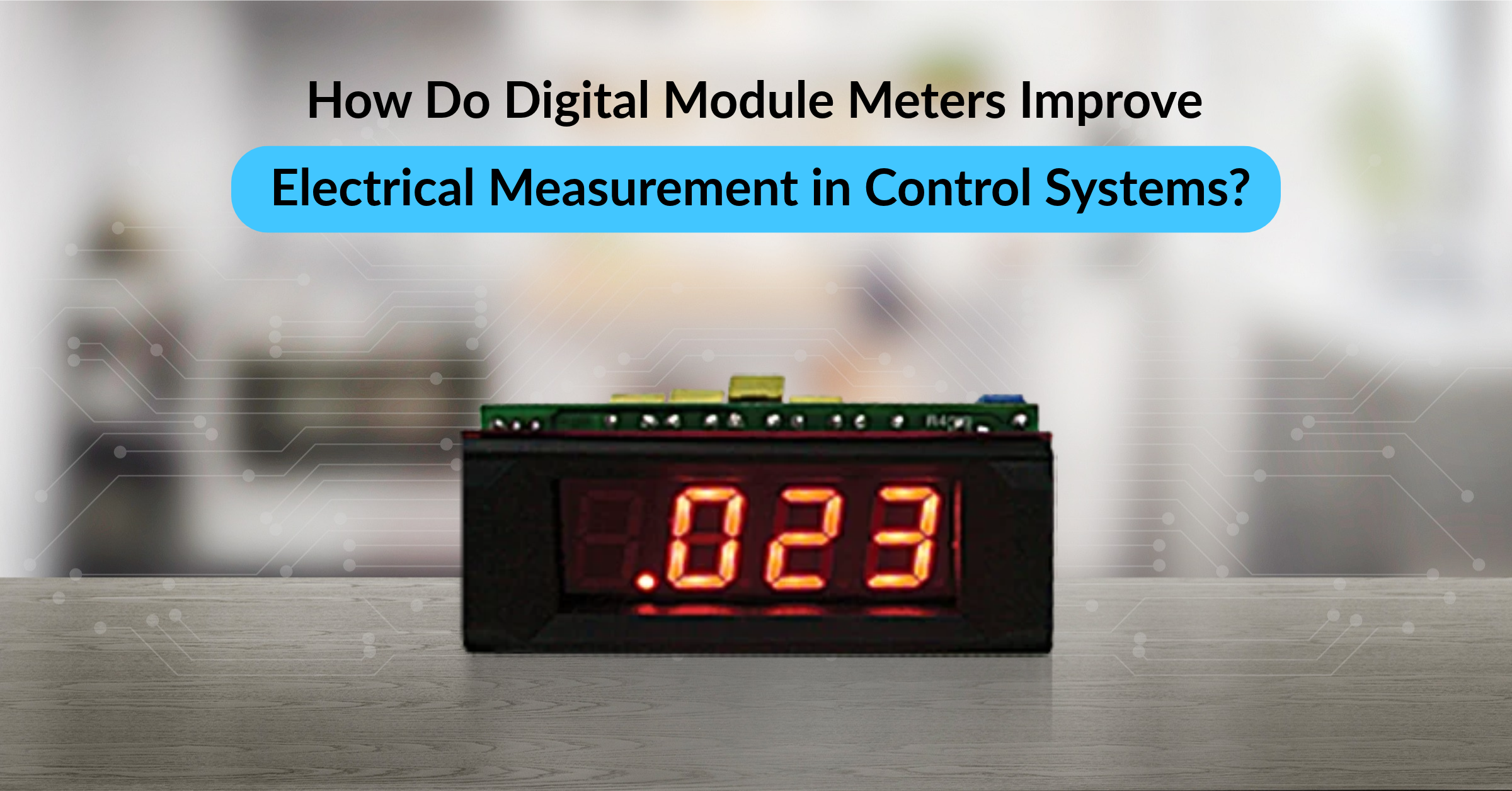
A Digital Module Meter is a compact electronic instrument that measures an electrical parameter and displays the result as a number. Based on the type, you can read voltage or current in the system.
These meters are designed for panel mounting. Operators can check readings directly on the equipment rather than connecting a separate instrument for each routine measurement.
Beemet manufactures digital module meters with bright red, seven-segment LED displays. Its range includes 3½-digit and 4½-digit models depending on the different types of integration your system may need. The meters use dual-slope analog-to-digital conversion and come in a compact design. Checking these specifications helps ensure the meter suits the application.
To learn more about how these instruments work, read our guide to digital panel meters
What Electrical Parameters Can a Module Meter Measure?
A module meter can measure different electrical parameters depending on its design. Voltage and current are common options.
Parameter | What It Measures | Common Application |
DC voltage | Voltage in a direct-current circuit | DC power supplies and battery systems |
DC current | Current flowing through a DC circuit | Electronic equipment and DC controls |
AC voltage | Voltage in an alternating-current circuit, where supported | Electrical panels and power systems |
AC current | Current flowing through an AC circuit, where supported | Machinery and electrical equipment |
Digital voltage meters help operators check the levels against unexpected fluctuations. A Digital Current Meter shows the current flowing through a circuit, helping teams monitor electrical loads. Different module meters support different measurements. Check the product specifications for the input type, measurement range and any external components required.
Key Features of Digital Module Meters
The right meter should provide clear readings while also fitting well within the space and electrical requirements of the panel.
- Clear LED display: Bright numerical displays make readings easier to read during routine checks. Beemet’s module meters use red, seven-segment LED displays.
- Compact design: Module meters fit into control panels where space is limited. This makes it convenient to arrange multiple readings within a location.
- Suitable measurement ranges: Different models support different inputs. The range should match the expected voltage or current.
- Defined accuracy and resolution: Check for accuracy that indicates how close a reading is to the actual value. Resolution indicates the smallest change the display can show. Both are important when selecting electrical measurement instruments.
- Dual-slope conversion: Beemet’s module meters use dual-slope analog-to-digital conversion to process the input signal and display a numerical reading.
- Straightforward integration: Panel-mounted construction makes these meters suitable for use in electrical equipment and control systems.
Applications of Digital Module Meters in Control Systems
Digital module meters help operators check electrical values at key points in a system. Common applications include:
- Industrial control panels: Monitor voltage or current supplied to equipment and control circuits.
- Manufacturing machinery: Check electrical readings during routine inspections and maintenance.
- Power supplies: Help verify the output values against the expected operating range.
- Testing equipment: Display measurements during electrical and electronic testing, where the meter’s specifications meet the task.
- DC systems: Monitor voltage and current in suitable DC circuits.
Using a Digital Measuring Instrument makes routine readings easier to access. Operators may still need additional tests to diagnose a fault.
Benefits of Using Digital Module Meters
Digital module meters offer practical advantages in everyday electrical monitoring.
- Reading ease: Numerical displays reduce the need to estimate values from a scale. This makes routine checks more straightforward.
- Space saving. Their compact construction helps panel builders fit measurement instruments into smaller enclosures.
- Quick checks. Operators can view readings directly on the panel without connecting a handheld meter for every routine observation.
- Identifies discrepancies. A voltage or current value outside the expected range can alert operators to a condition that needs further investigation.
- Offers flexibility. Different measurement ranges allow users to select a meter suited to the equipment and circuit.
These benefits depend on choosing the correct model and installing it according to the manufacturer’s instructions. A digital display alone does not guarantee measurement accuracy.
How to Choose a Digital Module Meter for an Electrical Panel
Consider these factors before selecting a meter.
- Measurement type: Decide whether the application requires AC voltage, DC voltage, AC current or DC current measurement. Confirm that the model supports the required input.
- Input range: Choose a range that covers the expected operating values. Check the maximum permitted input before connecting the meter.
- Accuracy and resolution: Review both specifications to ensure the meter can provide readings suitable for the application.
- Display visibility: Consider digit size, brightness and viewing distance. Operators should be able to read the display from their normal working position.
- Panel dimensions: Check the meter’s body dimensions and panel cutout requirements before installation.
- Power supply: Confirm the meter’s supply requirements and match them to the available panel supply.
- Connection requirements: Some current measurements require an external shunt or another suitable component. Follow the manufacturer’s wiring diagram.
Beemet offers digital module meters with different measurement ranges. Review its Digital Module Meter range to compare specifications and identify a suitable option.
Digital Module Meter vs. Conventional Analog Meter
Both meter types display electrical measurements, but they present readings differently.
Feature | Digital Module Meter | Conventional Analog Meter |
Display | Numerical value | Pointer and graduated scale |
Reading method | Read the displayed number | Estimate the value from the pointer |
Panel design | Compact module options | Depends on the meter type |
Changing readings | Displays updated numerical values | Shows changes through pointer movement |
Suitable use | Applications requiring clear numerical readings | Applications where pointer movement is useful |
A digital meter can make precise numerical readings easier to interpret, while an analog meter provides a visual indication of movement across a scale. The better choice depends on the application, required accuracy and operator preference.
If you need more than one reading on the panel, compare options in our digital panel meter vs multifunction meter guide.
Conclusion
Accurate electrical readings help keep control systems operating within their intended limits. Selecting a meter that matches the equipment and measurement requirements gives operators the information they need for routine checks and maintenance.
Beemet’s Digital Module Meters offer options for electrical measurement across different control panel applications.
FAQs
It measures and displays electrical parameters, such as voltage or current, in numerical form. It is commonly installed in control panels and electrical equipment.
Some models support both, while others measure only one type. Check the product specifications before selecting a meter.
Check the current range, input type, accuracy and connection requirements on the product datasheet.
Yes. They can be used in industrial control panels, manufacturing equipment and power supplies when their specifications match the application.
Beemet offers digital module meters for electrical measurement and control systems.